
I Fix APAC Regions, Then Hand Them Back.
The Pattern That Defines My Work
The pattern is the same every time, across Alteryx, Zendesk, Salesforce, Oracle and IBM. Diagnose fast, make the hard people calls early, then grow.
Three things I bring that a US transplant doesn't
I get hired when a region is broken.
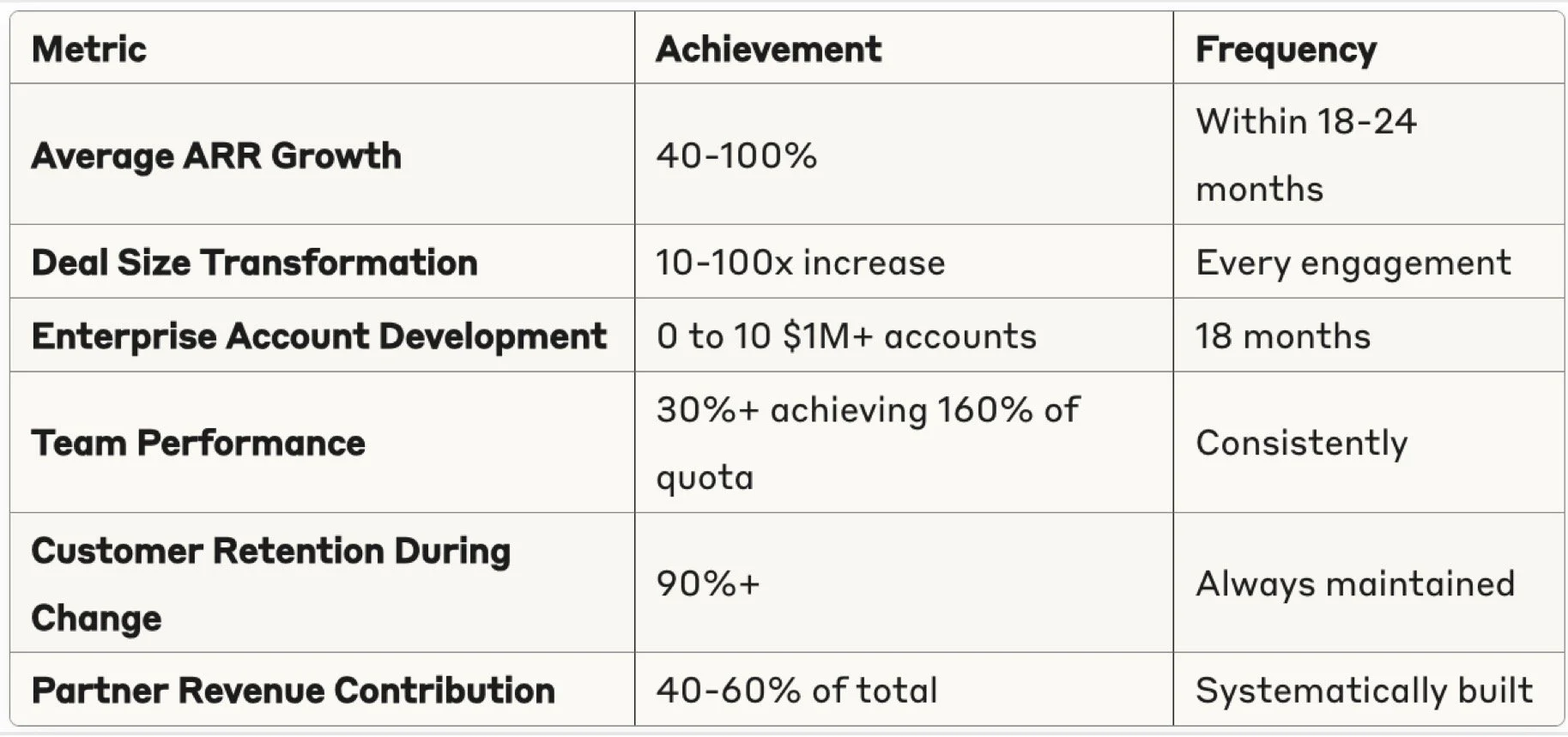
Zendesk: average deal size from $15K to $150K, including a $9.6M contract, the largest in the region's history.
Alteryx: 40% ARR growth, having replaced 60% of an underperforming leadership team.
Oracle CRM OnDemand: 100% revenue growth, after moving on half the underperformers and promoting the managers worth keeping.
Salesforce: built APAC's largest cloud business unit at $120M ARR.
Broken is the brief. I'm not much use when everything is already working.
Six markets, each its own animal. I've carried a number in every one.
Japan: grew it from 10% to 25% of regional revenue, rebuilt the team, and moved decisions through nemawashi so the meeting only ratified what was already agreed.
Korea: read the hierarchy and earned jeong before expecting a decision.
India: scaled through partner networks across a genuinely varied market.
Southeast Asia: a hub-and-spoke model across eleven markets.
Greater China: held global standards while the guanxi got built locally.
ANZ: enterprise adoption in heavily regulated markets.
I don't just know these markets. I've transformed businesses in each of them.
Sales is where the problem shows up. The fix usually runs through marketing, success and partnerships too.
Methodologies (MEDDICC, TAS, SPICED) that actually stick.
Partnerships that end up driving 40 to 60% of revenue.
Develop the talent worth keeping, move on to the rest.
Sales, marketing, customer success and partnerships connected into one engine.
None of it holds if you only paper over the sales number.
How Repeatable Growth Was Built
My Consistent Track Record
What it means if you hire me
Lower risk: I've run this exact play several times.
Speed: there's a playbook, so we skip the first six months of working it out.
Cultural fluency: I keep you out of the expensive market-entry mistakes.
Durability: the engine outlasts the engagement.
Relationships: mine become yours, the partners and the buyers both.

The 18-month shape, roughly
Months 1-3: Diagnose and Design
Audit every deal in the pipeline
Assess every team member
Map the real buying process
Design transformation roadmap
Months 4-6: Decisive Action
Implement enterprise methodology (MEDDICC)
Launch "Big Deal" programme
Activate partner ecosystem
Months 7-12: Build Momentum
First enterprise wins validate the approach
Partner ecosystem generates pipeline
Performance culture takes root
Predictable patterns emerge
Months 13-18: Scale and Sustain
Enterprise pipeline becomes predictable
Average deal size expands 10x
Sustainable growth engine established
Leadership succession planned
The Key: Move fast on people decisions. Every month you wait costs you three.